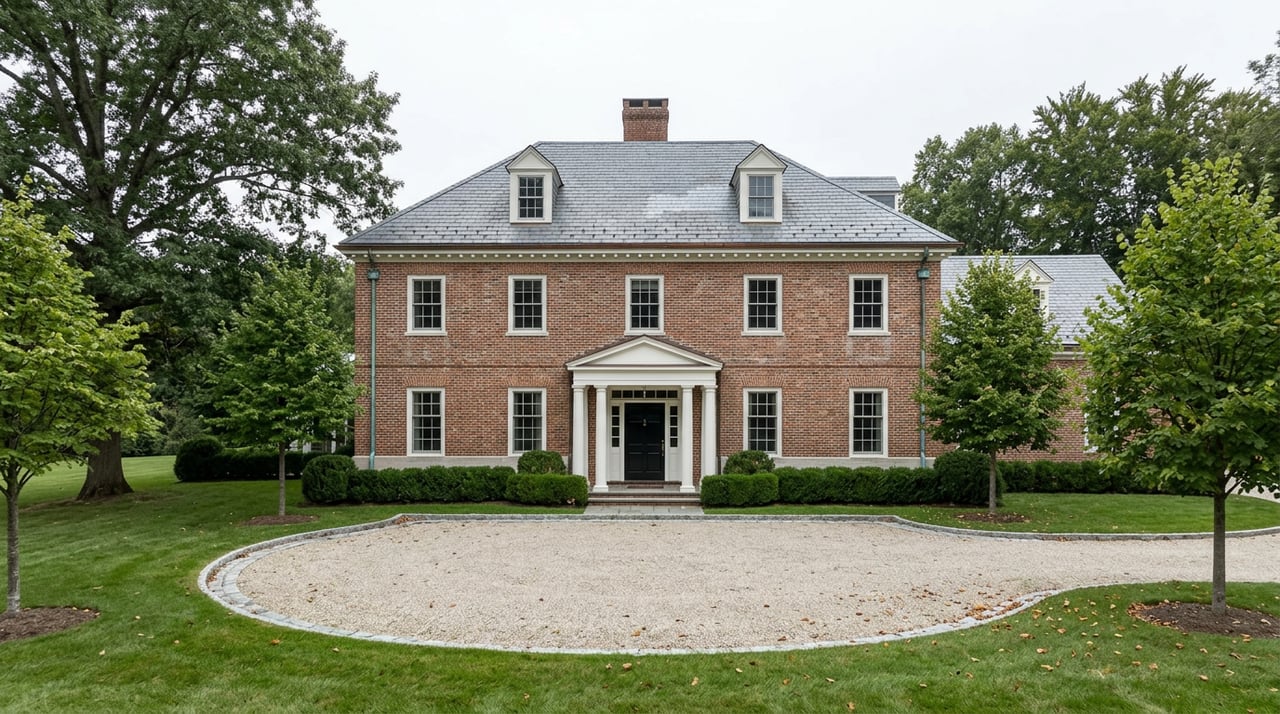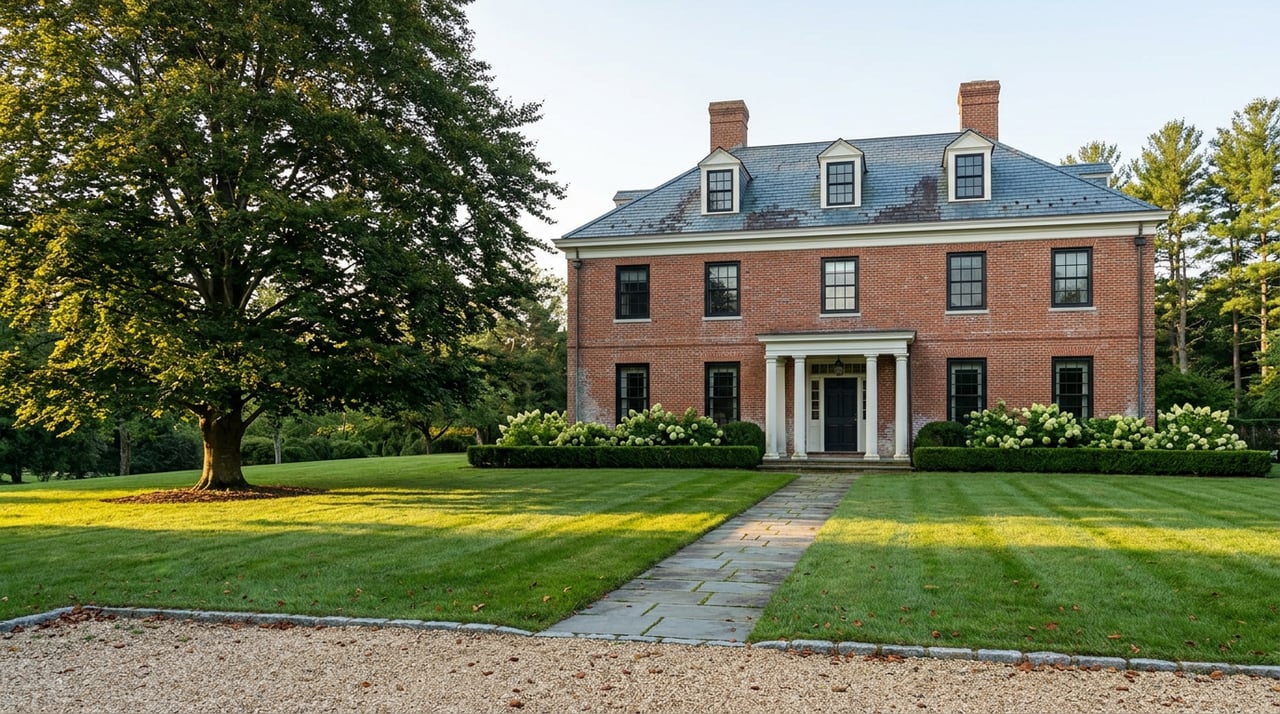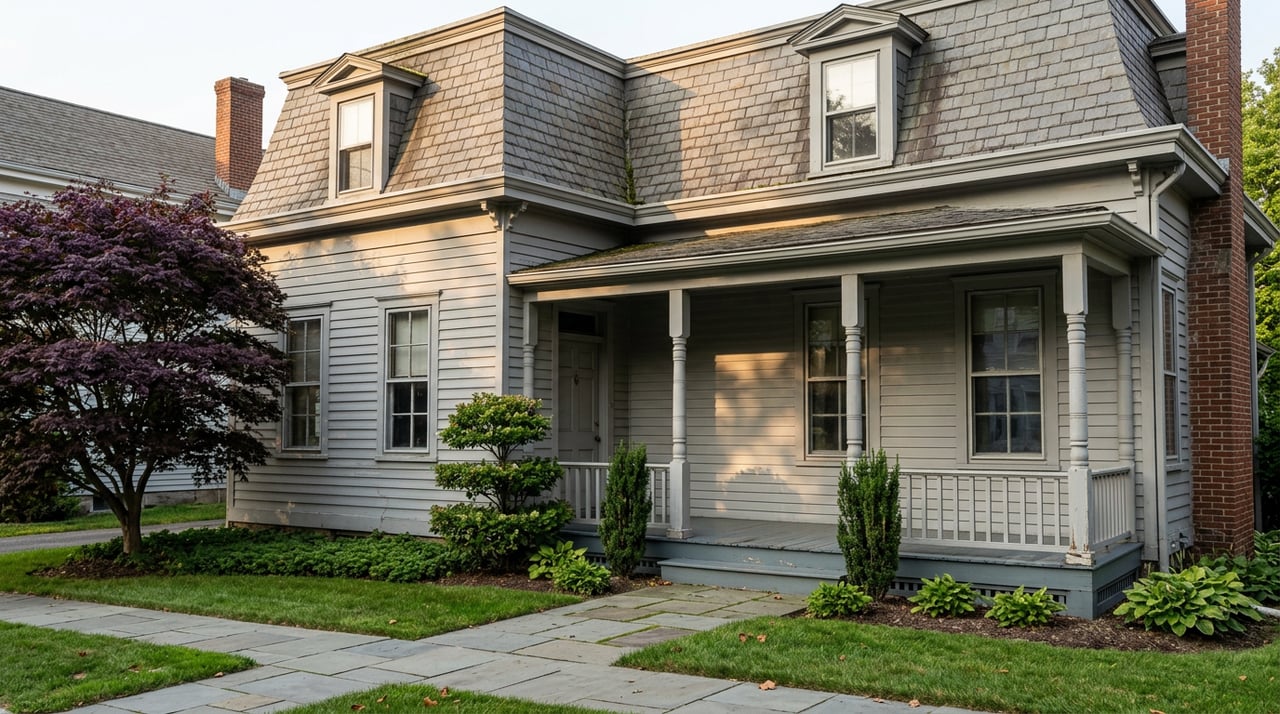
A buyer under contract on an older home near Main Street or East Broadway usually pictures one hurdle standing between signing and moving in: getting the Historic District Board to sign off on a window replacement or a new coat of paint. That assumption holds until title work or a pre-closing walkthrough turns up something nobody flagged at the open house. Maybe it's a decades-old deed covenant that governs the trim color. Maybe it's a permit that was never closed out from a renovation the previous owner assumed was fine because the materials matched. Either way, the closing slows down, and the reason is almost always the same: the buyer thought "historic district" meant one set of rules, when in Roslyn it can mean two or three, depending on which side of an invisible line the house sits on.
That's the part worth understanding before you write an offer or list a property, not after.
The Village Layer: What the Historic District Board Actually Reviews
Inside the Incorporated Village of Roslyn, any exterior change to a property in the historic district requires a permit and a review by the Historic District Board. That covers paint, siding, windows, roofing, lighting, landscape features, walls, fences, and masonry, which is a broader list than most buyers expect walking in. The Village has published guidelines to help applicants prepare, and the Historic Board Application has to be submitted alongside a standard building permit application, not instead of one.
Timing matters here. Applications are generally expected at least 14 calendar days before the next scheduled board meeting, and work cannot begin until both the building permit and any required zoning relief have been issued. If your renovation plans hinge on getting started by a certain date, that two-week filing window plus the board's own meeting calendar becomes part of your actual project schedule, not a formality to plan around later.
There's a cost layer too. Under the Village's historic preservation ordinance, if the board needs outside consultation on an application, whether architectural, historical, engineering, or legal, the applicant is responsible for reimbursing those fees to the Village, and the Village can require a deposit up front to cover it. For a straightforward repair using matching materials, the code carves out an exception: ordinary maintenance and repair with like materials doesn't trigger full review. But swap in a different material, a different profile, or a different color, and you're back in front of the board.
The Layer Most Buyers Never See: Private Covenants
Historic District Board review is public and codified. The second layer is private, and it's the one most buyers don't think to check until an attorney does.
The Roslyn Landmark Society, the nonprofit founded in 1961 by Dr. Roger and Peggy Gerry to protect the village's historic buildings, holds restrictive covenants on 37 specific properties across Roslyn. These covenants are attached to the deed itself, and they can govern exterior materials, color schemes, window styles, and even some interior alterations, independent of whatever the Historic District Board requires. The Landmark Society describes checking for these covenants as the property owner's own responsibility: buyers are expected to search the Society's property profiles for the specific address in question, where a "Yes" under Roslyn Landmark Society Covenant links to the actual covenant document spelling out what's restricted.
The catch is that a covenant doesn't announce itself the way a historic district boundary does. It's not something you'd notice driving past the house, and it can easily get lost between a seller who's owned the property for decades and a buyer relying on a standard title search. Anyone planning renovation work on an older Roslyn property, whether closing next month or five years from now, should run the address through the Society's profile search before assuming the Historic District Board is the only authority they'll answer to.
Same Name, Different Government
Here's the part that catches even careful buyers off guard: "Roslyn" isn't one government. It's stitched together from at least three separate jurisdictions, each running its own version of historic oversight, and the rules that apply to one don't automatically apply to the others.
The Incorporated Village of Roslyn is the one with the Historic District Board described above. Next door, the Incorporated Village of Roslyn Harbor is a separate municipality with its own building department, and it enforces its own certificate of occupancy and certificate of compliance rules. Under Roslyn Harbor's code, a building that's been enlarged, extended, or altered in a way that required a permit can't continue to be occupied more than 30 days after the work is finished without that certificate of compliance in hand, a detail that matters if you're closing on a property where recent work hasn't been formally signed off.
Then there's Roslyn Heights, which isn't a village at all. It's an unincorporated area governed directly by the Town of North Hempstead, and its historic district is a completely separate creation: established in 1999 to protect a specific neighborhood between Willis Avenue and the Roslyn Long Island Rail Road station. The original push came after a proposal to demolish a 1914 house on Elm Street and subdivide the lot, which local residents fought and ultimately used as the basis for seeking their own district designation. Most of the roughly 77 homes there date to the late nineteenth or early twentieth century, though a handful of non-contributing houses built since the 1950s sit inside the boundary too.
The detail that trips people up: Roslyn Heights' historic district was created locally by the Town, not through state or federal designation. At least one homeowner there completed substantial renovation work under the district's own design standards and then applied for a property tax break, only to be told the district carries no such benefit because it was never recognized at the state or federal level. The lesson isn't that historic designation is worthless. It's that "historic district" doesn't come with a standard set of benefits attached. Each one has to be checked on its own terms, in its own jurisdiction, before you assume anything about cost, process, or payoff.
Where This Surfaces at the Closing Table
All of this eventually funnels into one practical question: will unresolved historic-district issues hold up a sale? The mechanism is built into the building codes themselves. Before a certificate of occupancy or certificate of compliance is issued, the building department is required to examine the property and maintain a record of any violations found. If a previous owner replaced windows or added a fence without going through Historic Board review, or if a covenant restriction was never properly addressed, that gap doesn't disappear when the house changes hands. It surfaces during inspection, during a title search, or during the buyer's own due diligence, usually at the least convenient moment in the transaction.
For sellers, the fix is proactive: know whether your property carries a Landmark Society covenant, know whether any past exterior work went through the right review, and resolve open violations before you list rather than after an accepted offer. For buyers, it means treating "historic district" as a question with more than one answer. Which village or town actually governs this address? Is there a covenant attached to the deed? Has all prior exterior work been closed out with the right certificate? Those answers shape your renovation timeline and your budget well before they show up on a closing statement.
A Few Questions Worth Asking Directly
Does every older home in Roslyn fall under Historic District Board review? Only if it sits within the Village of Roslyn's designated historic district boundaries. Properties in neighboring jurisdictions, including Roslyn Harbor and unincorporated Roslyn Heights, answer to different local authorities entirely.
How do I find out if a specific property carries a Roslyn Landmark Society covenant? Search the address directly through the Society's property profiles. A "Yes" listing links to the actual covenant document describing what it restricts.
Does a historic designation lower my property taxes? Not automatically, and not everywhere. Village of Roslyn properties on the National Register may have different eligibility than a locally created district like Roslyn Heights, which carries no state or federal recognition and, per at least one documented case, no tax benefit at all. Confirm the specific designation before assuming any financial upside.
If you're weighing a purchase or a sale of an older home anywhere in Roslyn, the layers above are exactly the kind of detail that belongs in your due diligence from day one, not something to untangle mid-contract. The Sun Sha Team works these transactions across the North Shore regularly and can help you map out which rules actually apply to a specific address before you're under contract. Reach out for a free home valuation and a clear-eyed read on what a property's history means for your timeline.