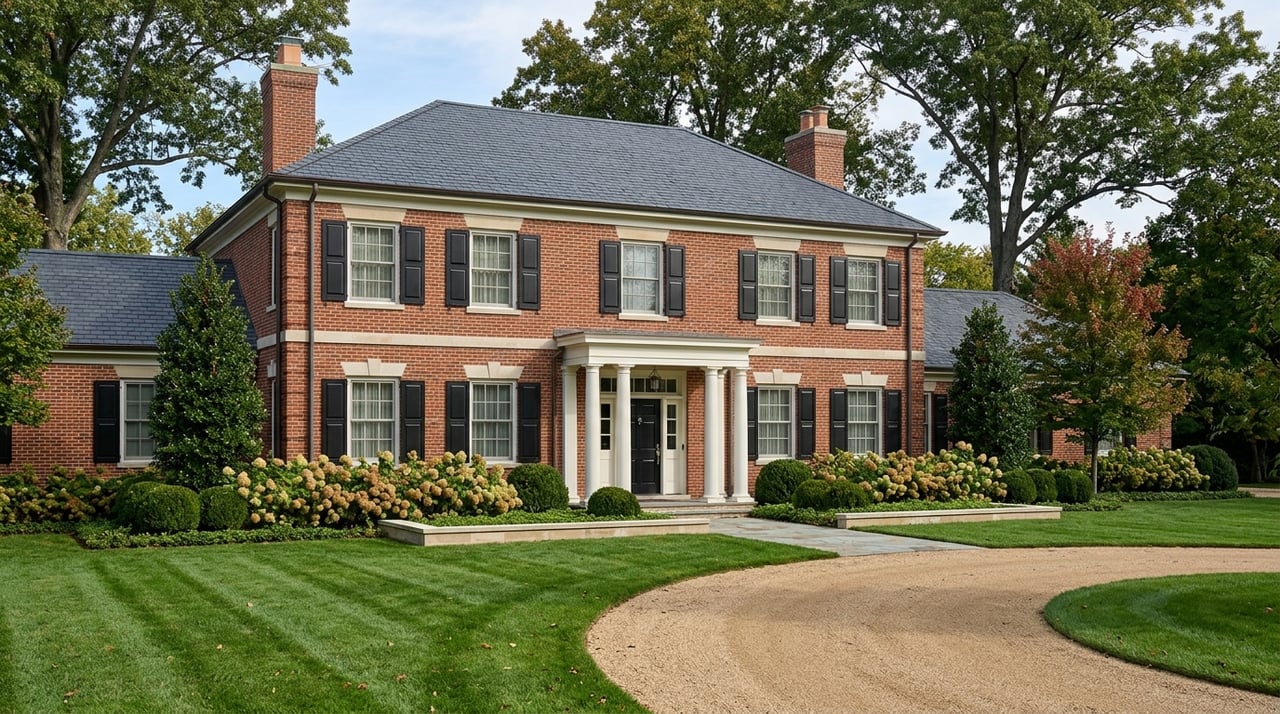
If you are drawn to space, privacy, and a quieter daily rhythm, Old Westbury stands out for a reason. This is one of the North Shore’s most estate-oriented communities, where large lots, winding roads, and deep landscaping shape how the village feels and functions. If you are considering a move here or simply want to understand what sets it apart, this guide will walk you through Old Westbury’s estate lifestyle, from lot sizes and architecture to recreation, access, and the tradeoffs that come with this setting. Let’s dive in.
What defines Old Westbury
Old Westbury’s identity is rooted in land, scale, and history. The village was first settled in 1658, and its estate era took shape in the late 1890s, when owners were drawn to rolling hills near New York City and a setting suited to country living and outdoor sports.
That early pattern still matters today. Village history describes the original estates as self-sufficient properties that could include everything from dairy operations to polo fields, which helps explain why the area still feels so different from denser suburban villages nearby.
Old Westbury also remains physically low-density. Census QuickFacts reports 5,071 residents, 1,007 households, 8.57 square miles of land, and about 500.3 people per square mile, along with a 92.6% owner-occupied housing rate and a median owner-occupied home value of $2,000,000+.
Estate scale shapes daily life
A big part of Old Westbury’s appeal is that the village’s zoning still protects an estate-style setting. Residential districts are organized around large lots, including one-acre lots in B districts, two-acre lots in BB districts, and four-acre lots in B-4 districts.
In the B-4 district, large setbacks and low lot coverage are used to preserve the estate look. In practical terms, that means homes often sit well back from the road, with more visual separation between properties and a stronger sense of privacy.
The village’s postwar growth included two-acre residential subdivisions, and in 1987 it later up-zoned to four-acre residential properties in parts of the village. That decision reinforced the long-term pattern that many buyers associate with Old Westbury today.
Privacy is part of the design
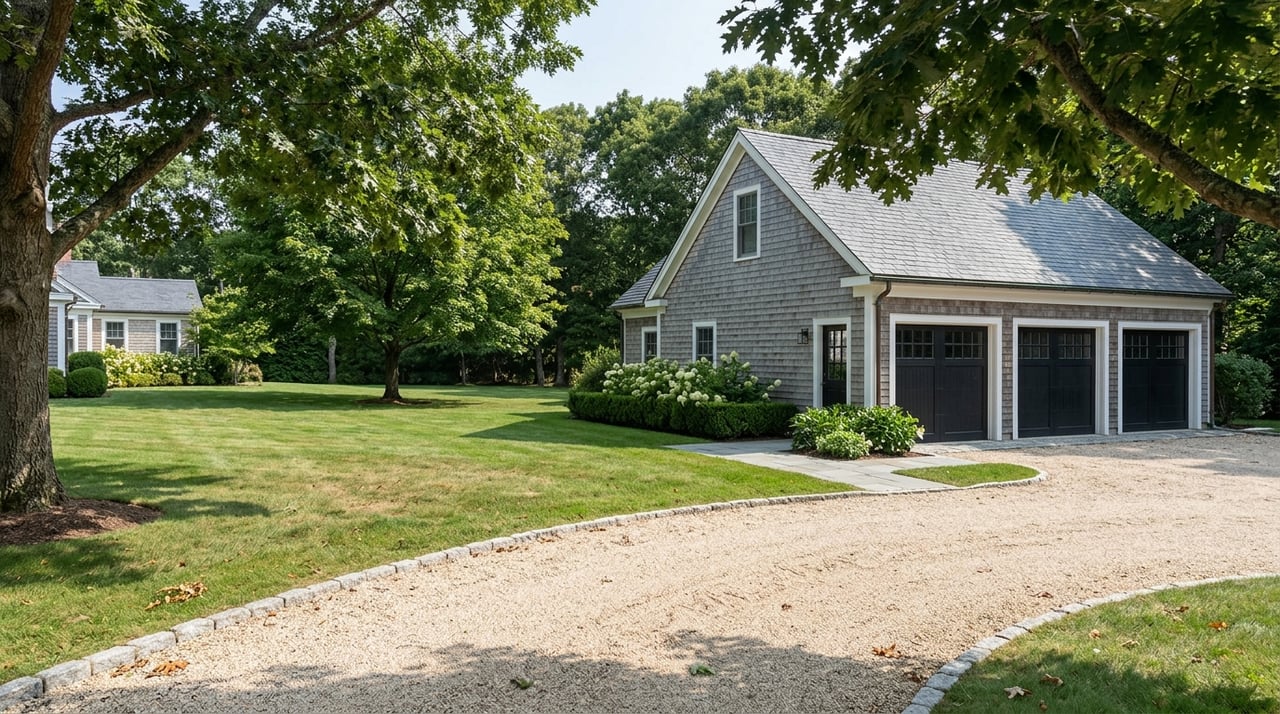
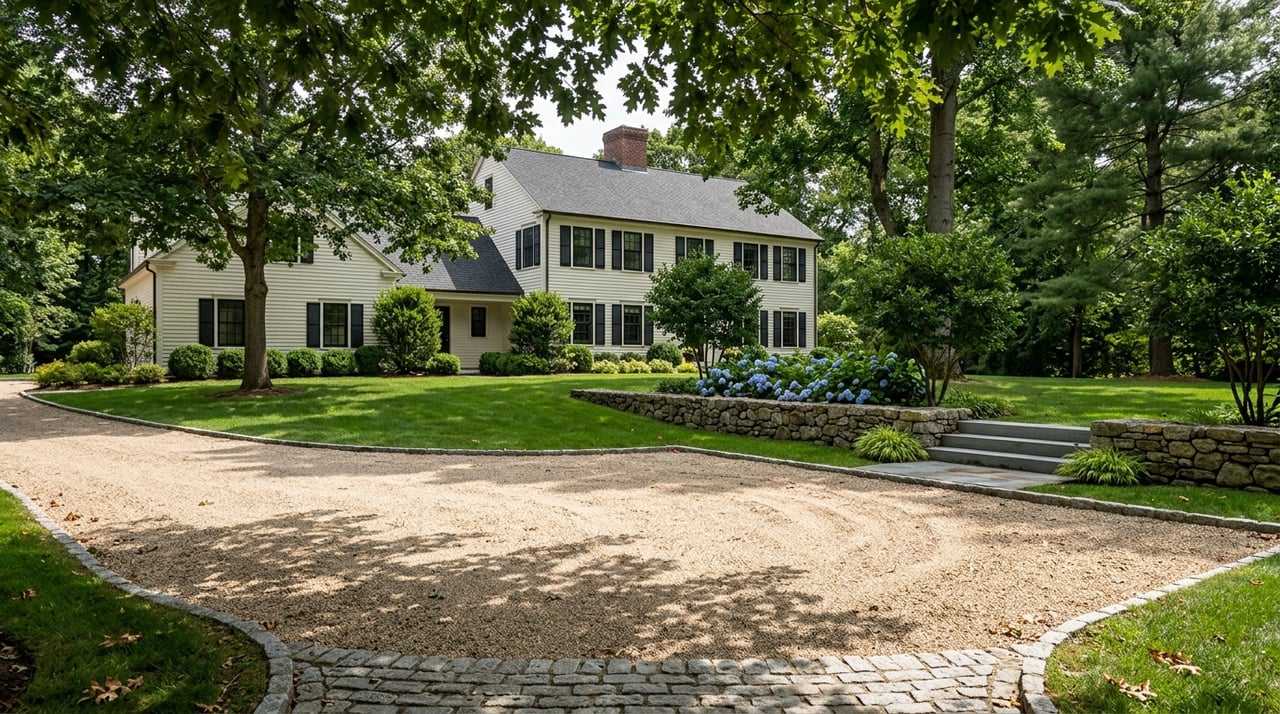
Old Westbury is not just large in acreage. It is also carefully shaped in how homes are presented from the street. Village planning documents describe large homes and estates set back from winding roads and screened by trees and vegetative buffers.
Even in areas with smaller lots, the streetscape can still read as estate-like. Walls, mature trees, and gated entrances help create a more secluded visual character, which is a meaningful part of the village’s identity.
For many buyers, this is one of the biggest lifestyle draws. If you value a home environment that feels quiet, insulated, and less exposed to the street, Old Westbury’s layout supports that preference in a very intentional way.
Architecture reflects the estate tradition
Old Westbury’s built environment is tied closely to its country-estate history. While individual homes vary, the village’s most visible estate forms are preserved in places like Old Westbury Gardens and the Phipps Estate.
Old Westbury Gardens describes its mission as interpreting an early 20th century American country estate through landscape, gardens, architecture, and collections. The village study describes the Phipps Estate as a large property with residences, accessory buildings, woodland gardens, open woods, paddocks, a pool, a pond, and internal roadways.
These landmarks are useful because they show the broader design language behind the village. The estate lifestyle here has long been tied to substantial grounds, landscape design, and homes that are part of a larger property setting rather than just a building on a lot.
Equestrian living remains relevant
In many communities, horse property is part of the past. In Old Westbury, it remains part of the present zoning framework. The village code allows accessory horse use in the B, BB, and B-4 districts, with a limit of one horse per 20,000 square feet of lot area.
That rule matters because it shows equestrian living is not just a historical footnote. It remains part of the village’s permitted residential lifestyle in several districts.
This will not apply to every buyer, of course. Still, even for people who do not plan to keep horses, the continued presence of paddocks, equestrian facilities, and large open grounds adds to the area’s estate character.
Green space is abundant, but often private
One of the first things people notice about Old Westbury is the greenery. The village study describes the community as desirable in part because of its abundant greenery and open space.
At the same time, much of that green space is privately owned. That means the visual experience can feel expansive and landscaped, but it does not function the same way as a village with many small public parks or neighborhood preserves.
The study specifically notes there are no smaller neighborhood parks or preserves for fee-free public open space. For buyers, that is an important distinction because it shapes how recreation and day-to-day outdoor use work in practice.
Old Westbury Gardens is a key landmark
Old Westbury Gardens is the village’s best-known public estate landmark. The village study calls it the centerpiece of the village and describes the property as including a mansion, formal gardens, landscaped grounds, woodlands, ponds, and lakes.
Its role is not only historical. The official site also lists tours, concerts, educational programming, and seasonal events, which gives the village a notable cultural destination within its estate setting.
For residents and visitors alike, Old Westbury Gardens offers a clear window into the area’s landscape tradition. It also helps explain why the village’s identity is tied so strongly to gardens, grounds, and preserved estate environments.
Recreation centers on clubs and institutions
Old Westbury’s lifestyle is shaped less by a walkable downtown and more by private grounds, clubs, and larger institutional campuses. The village study says recreation is largely concentrated in school grounds, golf clubs, equestrian centers, polo grounds, and university campuses.
Key local anchors include Glen Oaks Club, Old Westbury Golf and Country Club, Meadowbrook Polo Club, Old Westbury Equestrian Center, SUNY Old Westbury, LIU Post, and NYIT. Together, these uses reinforce the area’s long-standing connection to golf, equestrian activity, and open land.
The village study also characterizes Old Westbury as a quiet suburban community with very little land-use diversity and a predominance of large-lot single-family homes, residential estates, and institutional uses. In everyday terms, that usually means a car-oriented lifestyle with a premium on privacy and space.
Access works best by car and rail
For many North Shore buyers, Old Westbury’s appeal includes regional access. Old Westbury Gardens notes that it is about 20 miles east of New York City and sits between the Long Island Expressway and Jericho Turnpike.
That helps frame the location in practical terms. You have estate-style living, but you are still within reach of Manhattan and other major North Shore destinations.
For rail access, the same source notes that Penn Station riders can take the Long Island Rail Road to Westbury Station and then a taxi ride of about 2.5 miles. That does not make Old Westbury transit-oriented in the way some villages are, but it does give you a workable city connection.
Nearby communities add context
When you evaluate Old Westbury, it helps to see it as part of a broader North Shore network. The village study identifies nearby municipalities including Westbury, Muttontown, East Williston, Roslyn Harbor, Brookville, and Upper Brookville.
This context matters because many buyers compare these communities side by side. Even among nearby luxury markets, Old Westbury is especially associated with acreage, setbacks, and a more insulated estate feel.
If you are moving within the North Shore, these differences can shape your decision as much as price point or house style. Lifestyle fit often comes down to how much land, privacy, and daily quiet you want around you.
School district lines matter here
One practical point buyers should keep in mind is that Old Westbury spans multiple public school districts. According to the village study, Westbury UFSD lies east of Old Westbury Road, East Williston UFSD lies west of Old Westbury Road, Jericho UFSD serves the southeast corner, and Roslyn UFSD serves the northwest.
That means school district assignment is location-specific within the village. If that factor is important in your search, it is worth confirming district details early as you narrow down specific properties.
This is also a good reminder that village identity and school district boundaries are not always the same thing. In a place like Old Westbury, property location within the village can have a meaningful effect on how a buyer evaluates options.
The tradeoffs of estate living
Old Westbury offers a distinct lifestyle, but it is not for everyone. The same features that create privacy and visual calm also tend to mean more property maintenance, more driving, and less spontaneous walkability than you would find in a denser suburban village.
That tradeoff is closely tied to the village’s lot sizes, setbacks, limited commercial base, and pattern of private open space. If you want a setting built around acreage and separation, those features are part of the appeal.
If you prefer quick walks to shops, a busier street life, or a more compact residential pattern, you may experience the village differently. The key is to evaluate Old Westbury based on how you actually want to live day to day.
Who Old Westbury fits best
Old Westbury tends to fit buyers who want privacy, substantial grounds, and a North Shore address with regional access. It can be especially compelling if you are looking for a home environment centered more on land, landscaping, and private recreation than on a traditional town-center experience.
It also appeals to buyers who appreciate a legacy estate setting. The village’s history, zoning, and physical layout all work together to preserve a residential environment that feels deliberate, protected, and distinct within Nassau County.
For buyers approaching the market strategically, that clarity is useful. Old Westbury is not trying to be everything at once, and that is exactly why it continues to stand out.
If you are considering a move to Old Westbury or preparing to sell in this market, working with a team that understands luxury positioning, pricing discipline, and North Shore lifestyle differences can make the process much smoother. The Sun Sha Team offers thoughtful guidance across the North Shore with a hands-on, concierge-level approach.
FAQs
What is the estate lifestyle in Old Westbury like?
- Old Westbury’s estate lifestyle is defined by large lots, homes set back from winding roads, mature landscaping, and a privacy-first daily rhythm centered more on private grounds and club-based recreation than on a dense downtown.
How large are residential lots in Old Westbury?
- Old Westbury zoning includes one-acre lots in B districts, two-acre lots in BB districts, and four-acre lots in B-4 districts, with the B-4 district also using large setbacks and low lot coverage to preserve the estate setting.
Are horses allowed on residential property in Old Westbury?
- Yes. The village code allows accessory horse use in the B, BB, and B-4 districts, with a limit of one horse per 20,000 square feet of lot area.
What public green space is available in Old Westbury?
- Much of Old Westbury’s greenery is privately owned, and the village study notes there are no smaller neighborhood parks or preserves for fee-free public open space. Old Westbury Gardens is the village’s best-known public estate landmark.
How close is Old Westbury to Manhattan?
- Old Westbury Gardens states the village is about 20 miles east of New York City. For rail access, Penn Station riders can take the Long Island Rail Road to Westbury Station and then a taxi of about 2.5 miles.
Which public school districts serve Old Westbury properties?
- Old Westbury spans multiple districts, including Westbury UFSD east of Old Westbury Road, East Williston UFSD west of Old Westbury Road, Jericho UFSD in the southeast corner, and Roslyn UFSD in the northwest.
Is Old Westbury walkable for daily errands and activities?
- Old Westbury is generally better described as car-oriented. The village study notes limited land-use diversity, a predominance of large-lot homes and estates, and recreation patterns centered on clubs, campuses, and larger properties rather than a compact village center.